In April 1976, the world was captivated by the shocking news of Howard Hughes’ death, a billionaire recluse whose final days were shrouded in mystery. But while the headlines focused on Hughes, I was experiencing my own life-altering event—one that placed me in the center of a groundbreaking medical technology at Emory University Hospital.
At just 15 years old, I was diagnosed with a juvenile nasopharyngeal angiofibroma (JNA), a rare, benign tumor that typically affects adolescent males. Though it wasn’t cancerous, its location deep in the nasal cavity made it incredibly dangerous. Left untreated, it could obstruct breathing, cause severe nosebleeds, and even erode into critical structures like the skull base and brain. Eventually, I was told, I would have most likely perished from a stroke. At the time, JNA was so rare that only a handful of cases were treated each year in the United States, with Emory, the Ochsner Clinic in New Orleans, and the Mayo Clinic being among the few hospitals capable of performing the delicate surgery required to remove them.
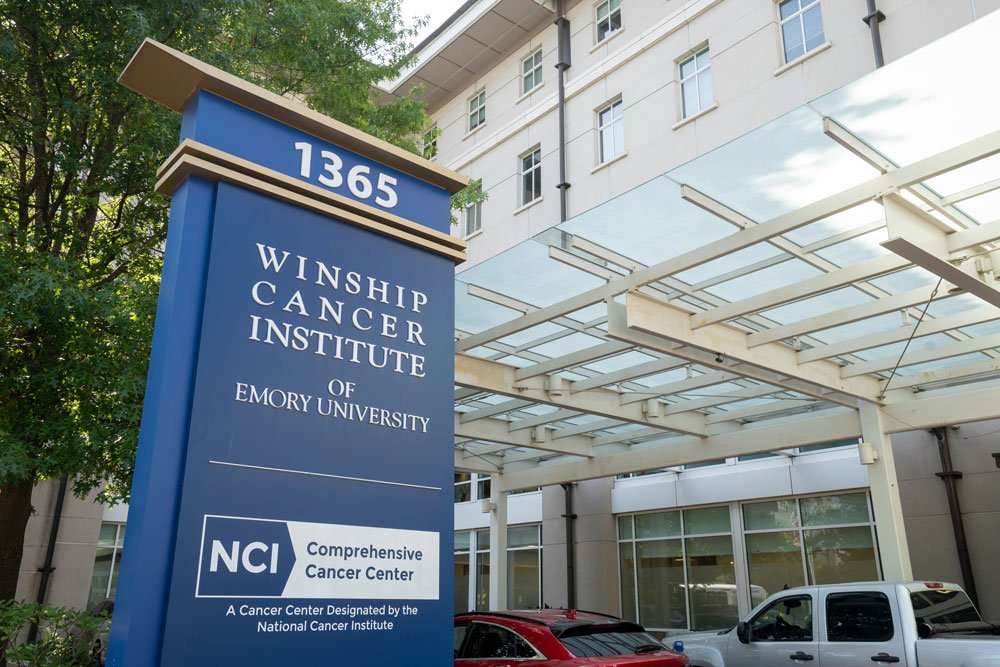
Immediate surgery would be required; my ENT called surgeons at all three hospitals to explain the urgency; none, it seemed, had the ability to perform the operation within days. However, I had an ace up my sleeve...my father was a rising star within the Coca-Cola USA marketing department- and Emory has deep, deep ties to Robert Woodruff and the Coca-Cola company. Within hours, I was raced from Piedmont Hospital (where I had undergone an exploratory operation) to what would become the center of my universe for the next week; a bed at the Winship Clinic wing of Emory University Hospital, where one more unbelievable advantage awaited. One I could only dream of...
Emory, being a leading teaching hospital in the United States, had just acquired a brand-new CT scanner.
A Revolutionary Tool in 1976
Computed Tomography (CT) scanning was still in its infancy in the mid-1970s. The first-ever clinical CT scan had only been performed in 1971 in London, and whole-body CT scanners were just beginning to appear in leading hospitals worldwide. Emory University Hospital was among the first in the Southeast to install one, giving my doctors an unprecedented ability to see inside my head with precision never before possible.
I spent hours inside that machine, as my doctors meticulously mapped out the location of my tumor. It was loud, and it took a long time, but it was absolutely necessary. Before CT scans, surgeons relied on invasive procedures, X-rays, and exploratory surgery to understand the full extent of tumors like mine. But with CT imaging, my doctors could pinpoint exactly where to excise the angiofibroma while minimizing damage to surrounding tissue.
At the time, my doctor told me something that has stuck with me ever since:
“This machine saved your life.”
How Rare Was My Condition?
In the mid-1970s, juvenile nasopharyngeal angiofibroma was so rare that my ENT, a well-known & beloved Buckhead doctor, had only seen one case throughout his entire 20+ career…and his specialty was the nose and ears! For perspective, records from Mayo Clinic between 1962 and 1977 show that they treated only 40 cases over that 15-year span—averaging just 2.7 cases per year. That means my case wasn’t just rare—it was practically one in a million. Surgical removal was the primary treatment, but due to the tumor’s location and the risk of excessive bleeding, it was considered one of the most challenging head and neck
Even today, JNA remains uncommon, though the number of diagnosed cases has increased due to better imaging technology and heightened awareness. The introduction of embolization procedures (where the tumor’s blood supply is cut off before surgery) has also made treatment much safer than it was in my time. But in 1976, the best tool available to my doctors was the brand-new CT scanner, which helped ensure a successful surgery and recovery.
A Coca-Cola Connection?
There’s another layer to this story that makes it even more personal: Coca-Cola money helped fund Emory’s medical advancements, and my father had been with Coca-Cola marketing for over ten years by this time. He was well-known throughout the firm, from Robert Woodruff on down; so when Emory first told my ENT that I would need to travel to New Orleans for the operation on a Thursday afternoon, a team of Coke executives interceded on my behalf. It’s no secret that Emory University has long benefited from the philanthropy of the Woodruff family, the same family behind Coca-Cola’s immense success. Their generosity helped Emory become a leader in medicine, bringing in state-of-the-art technology—like the CT scanner that ultimately played a crucial role in my treatment.
Within a few hours, a bed was located, the CT scanner was blocked off for hours over the weekend for my use, and the surgeon cleared his Monday schedule in order to perform the eight hour operation. I was raced by ambulance across town Friday morning. Quite the whirlwind; as I had been running hurdles for my high school track team just a few days prior.
A 1-Liter Glass Coca-Cola Bottle
Following the life-saving operation on Monday, I recovered for the rest of the week and had follow-up surgery late in the week to remove much of the packing inside my head. Sadly, this whole episode had unfolded so quickly that I hadn’t had time to have my braces removed, and as anyone who has had major surgery knows, one’s mouth gets extremely dry from the moment the pre-op shot is administered. To say the least, my lips were a bloody mess, having dried out and been exposed to the metal edges of braces for over a week.
Of course, my diet was very restricted following both operations, and for days on end, the only soft drink I was allowed to have was ginger ale. But having grown up on Coca-Cola, I craved nothing more than an ice-cold, refreshing Coke. Well, that and a pizza.
So, on the last day of my stay at Emory, the nurses got together and surprised me with a small pizza party. They brought in a couple of pizzas from Everybody’s (a wonderful pizza place nearby) and a boatload of Coca-Cola.
Dad, in his wisdom, brought me a 1-liter glass Coca-Cola bottle and encouraged me to keep it just as it was. He reminded me that good things come to those who wait.
“I know you’ve endured over a week of incredible pain, trepidation, and fear,” he told me. “And I promise you—you will be a better person for having endured it so well. From time to time, glance over at this bottle of Coke and know that it, like you, is rare and getting rarer every day.”
Then, he added something that has always stayed with me:
“We introduced these recently, hoping to convince people to buy and recycle larger bottles of Coke. It would be good for everyone—certainly less waste than smaller bottles and better for the environment. But…” He trailed off for a moment before continuing. “They’re too heavy. They break too easily. Our bottlers’ production lines can’t handle them. And the world is moving to PET plastic bottles. Hang on to this bottle… just like you, it’s going to be a collector’s item someday.”
Looking Back: A Story of Timing and Technology
Reflecting on that time, I can’t help but think about how different my outcome might have been had I been born just a few years earlier, before CT scanning was available. The combination of being at one of the few hospitals with this cutting-edge technology, having a skilled medical team, and receiving treatment for an exceptionally rare tumor makes my story feel like a moment where history, medicine, and fate aligned.
The fact that I was inside a machine that had only been in use for a short time—while the world was mourning the loss of one of history’s most enigmatic billionaires—adds another surreal layer to it all. In that moment, while the world was focused on Howard Hughes, my own life was being shaped by the very future of medicine.
And I can say with confidence: I owe my life to that CT scanner...and things definitely go Better With Coke!